Australian Space Research Conference
Broaden Our Horizons: Adelaide, September 29-October 1, 2026


About the Conference
ASRC2024
Details about the 2026 conference
The 25th Australian Space Research Conference (ASRC) was held in South Australia at Adelaide University during the week of September 28 to October 2, 2026. It is planned as a three day conference.
This conference is organised by the National Space Society of Australia, Mars Society Australia, and members of the Australian space research community with a heritage of organising 18 successful ASRC meetings to date.
The ASRC is the primary annual meeting for Australian space research. It welcomes researchers, engineers, educators, industry professionals, policymakers, and other workers from across the academic, industry and government parts of the space sector, and is not limited to Australian-based research. International participants are most welcome.
With a commitment to equality and diversity, and to encourage the next generation, we especially welcome abstracts from women, minority groups, and students.
Abstracts Opening: 18 May 2026
Registrations Open: 3 August 2026
Abstracts Close: 24 August, 2026
Draft Program Release: 31 August 2026
Early-bird Registrations close: 2 September 2026
Conference Start: 29 September 2026
Conference End: 1 October 2026
Conference written papers due: 19 October 2026
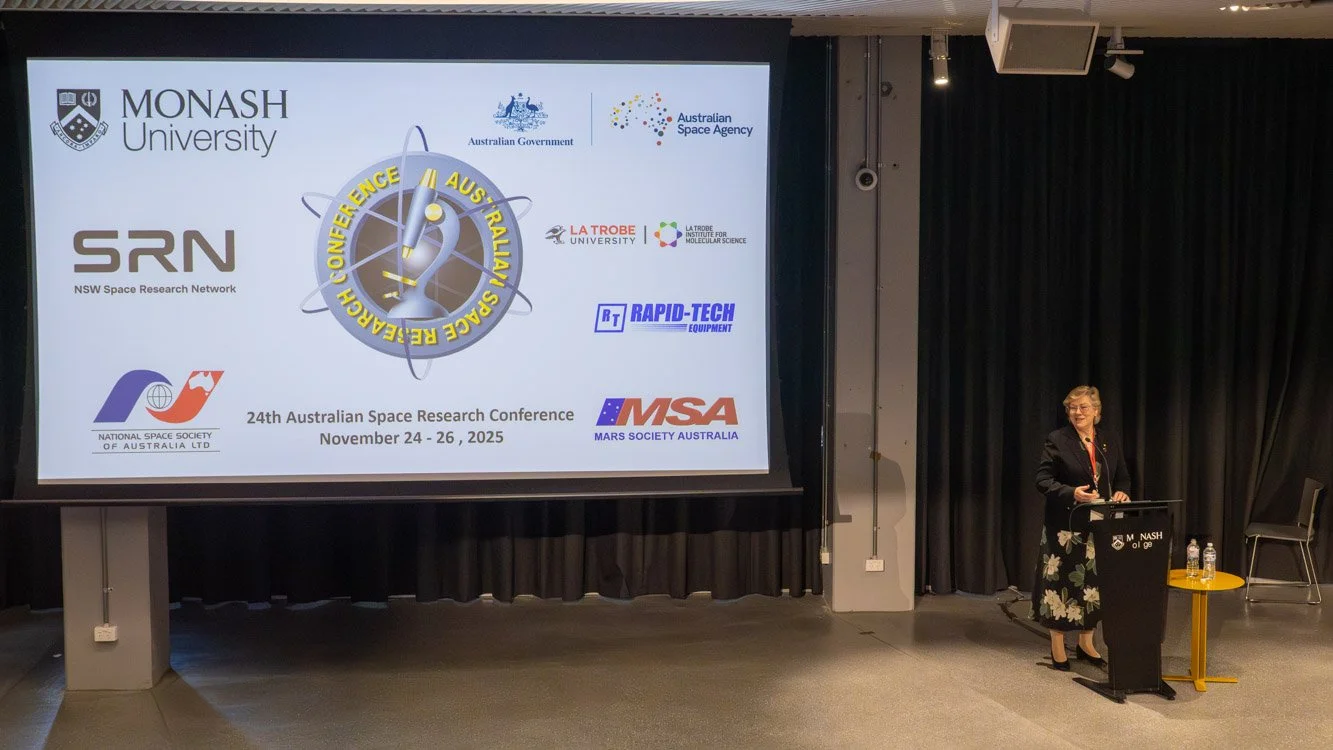
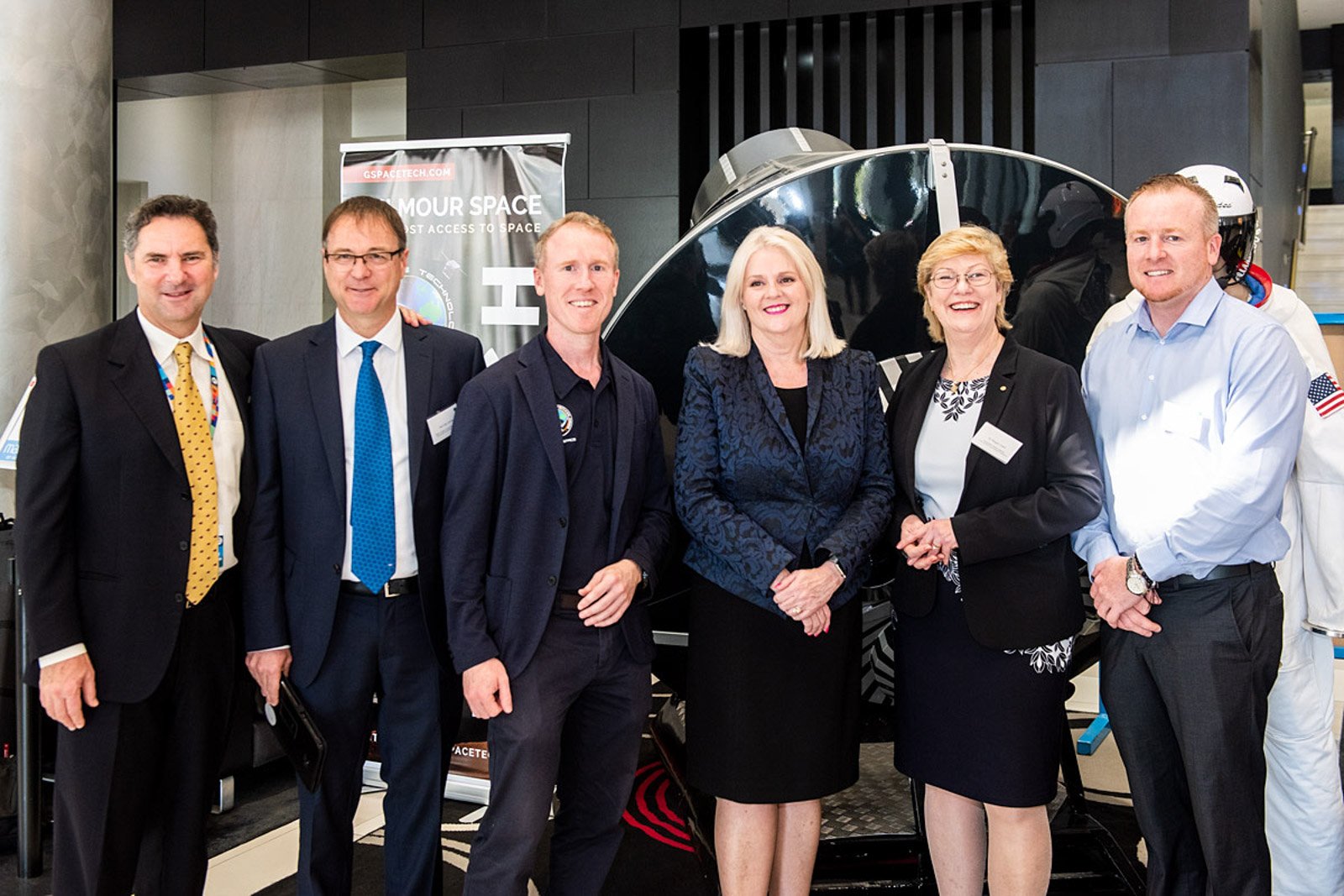


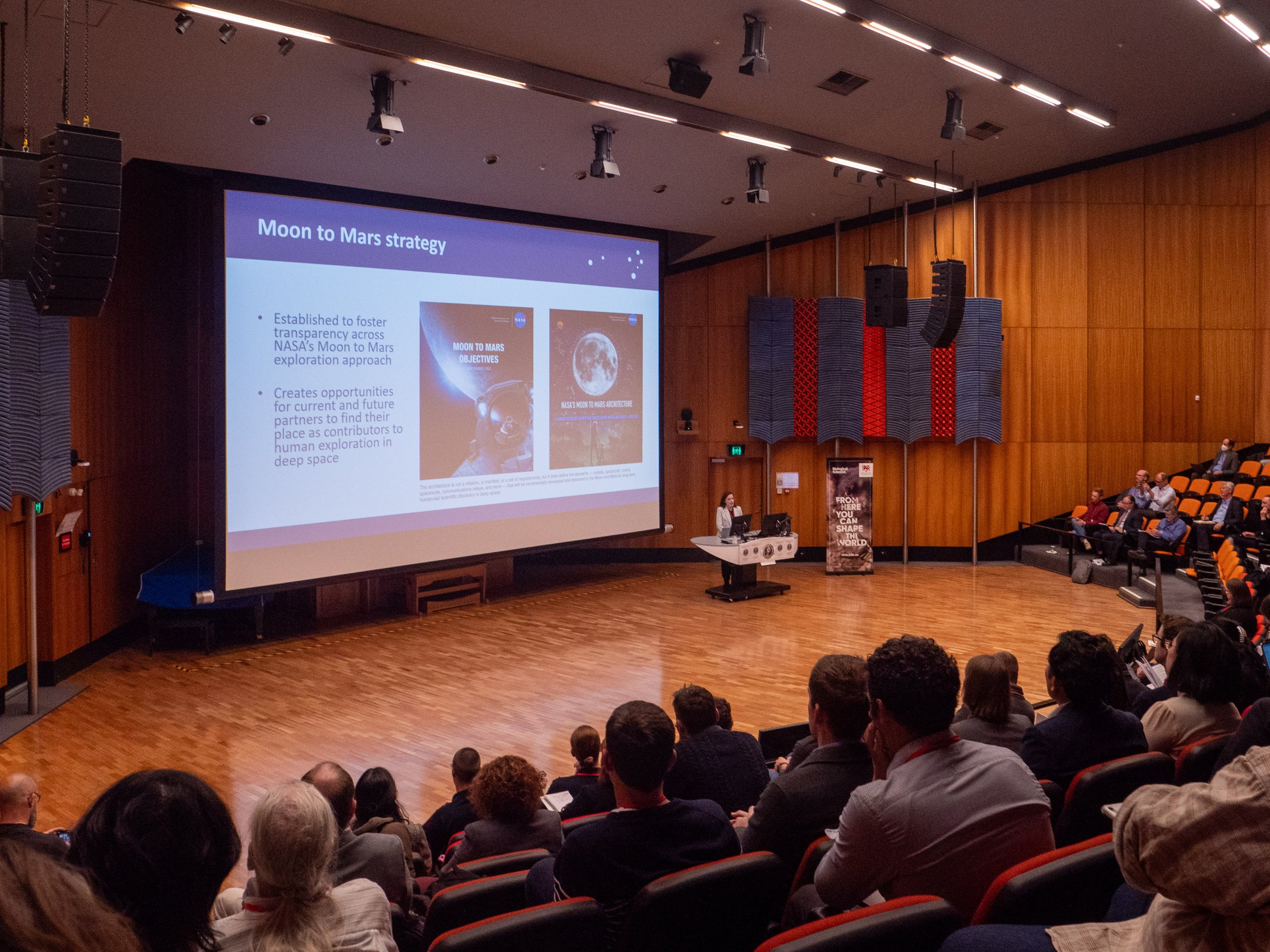
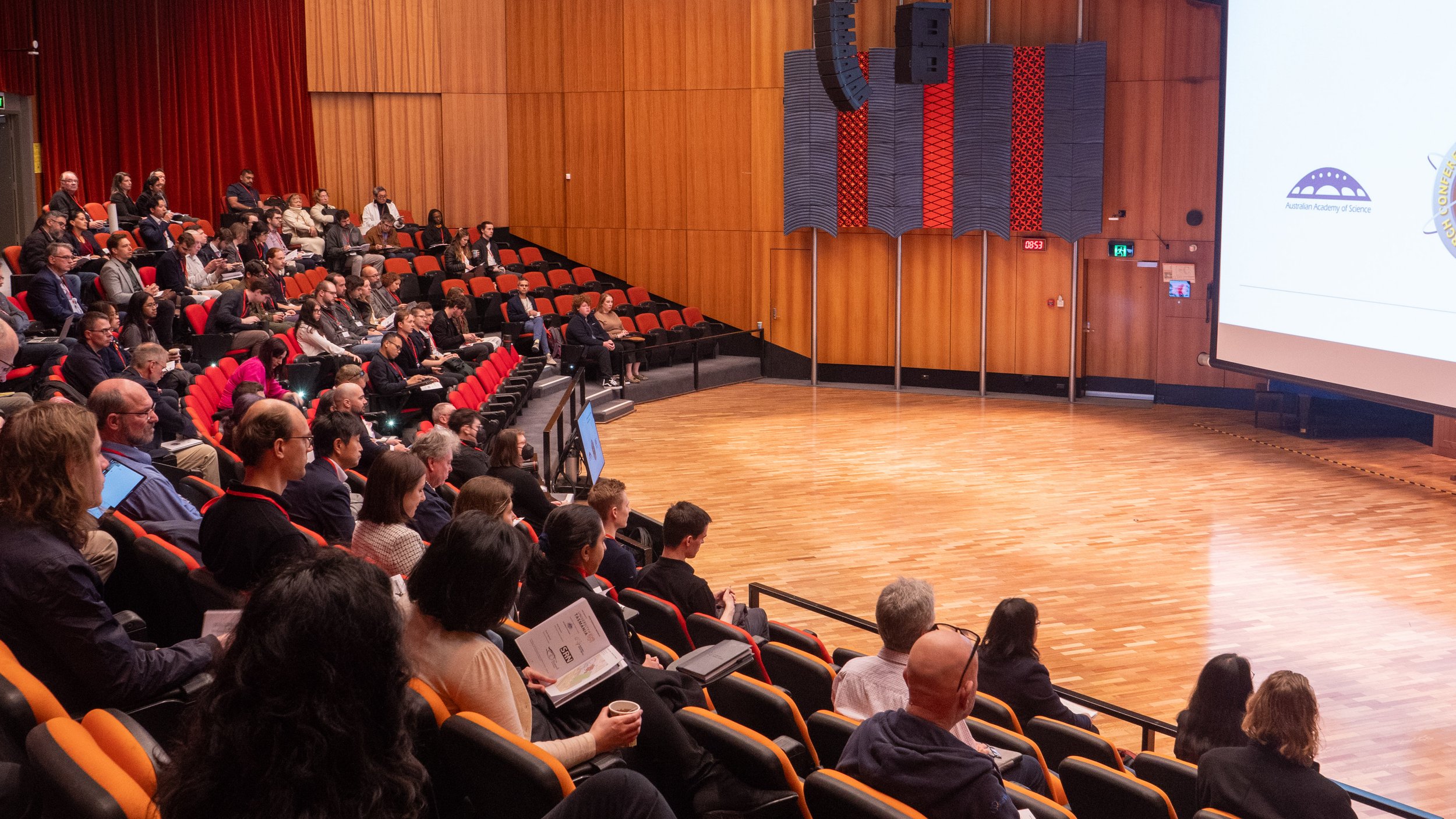
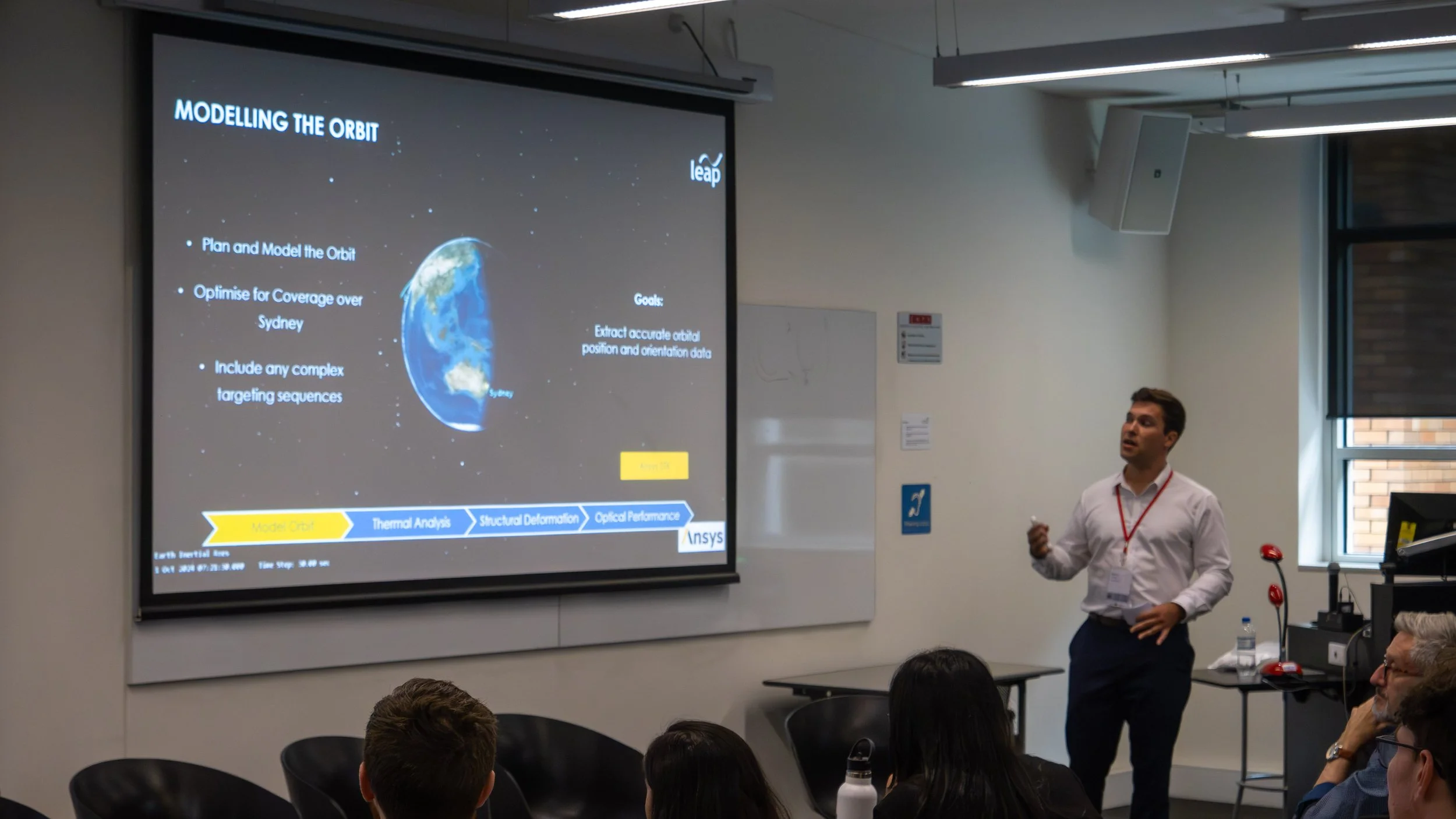
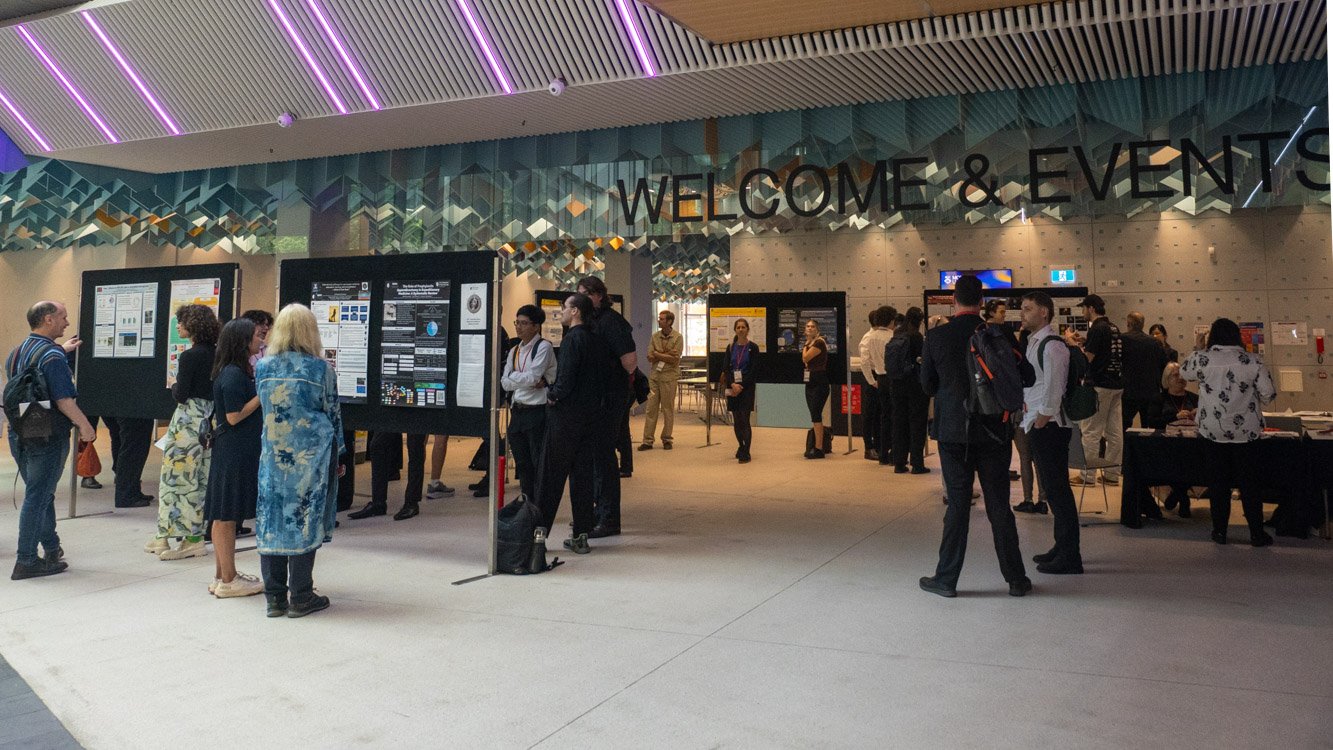
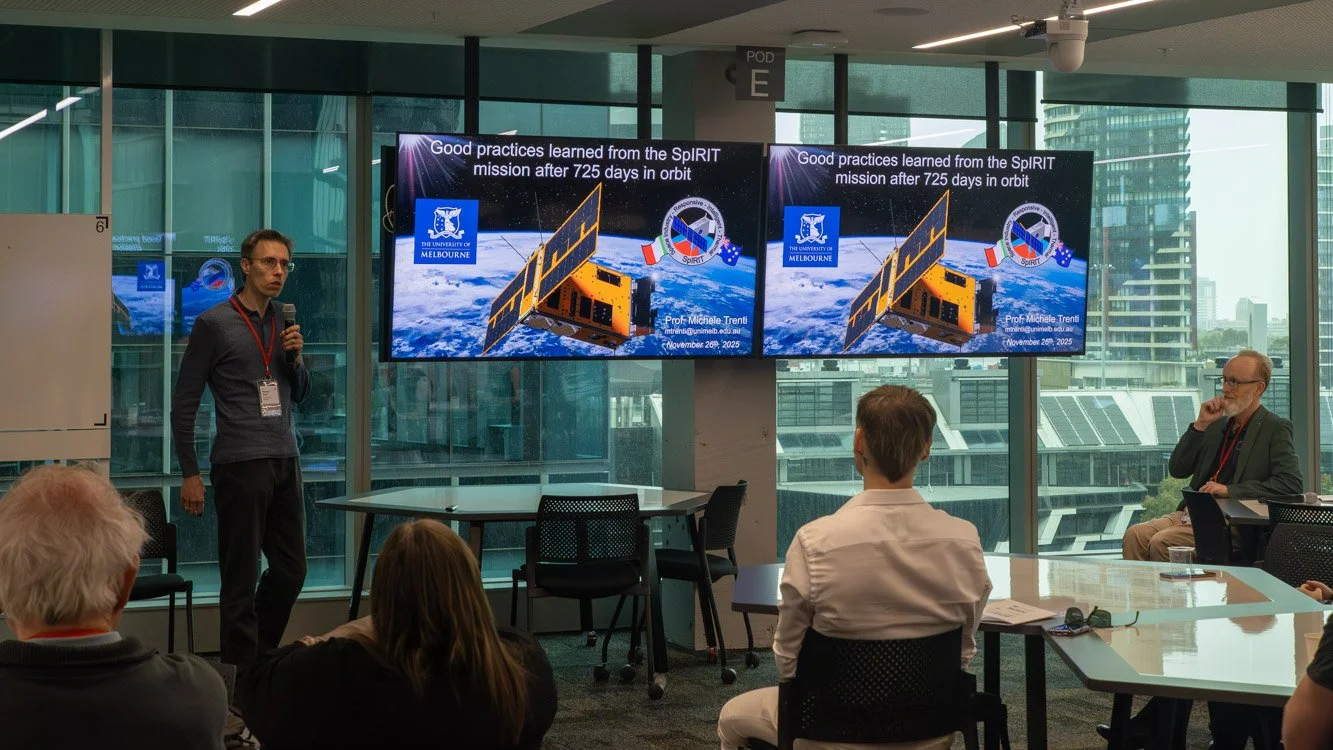
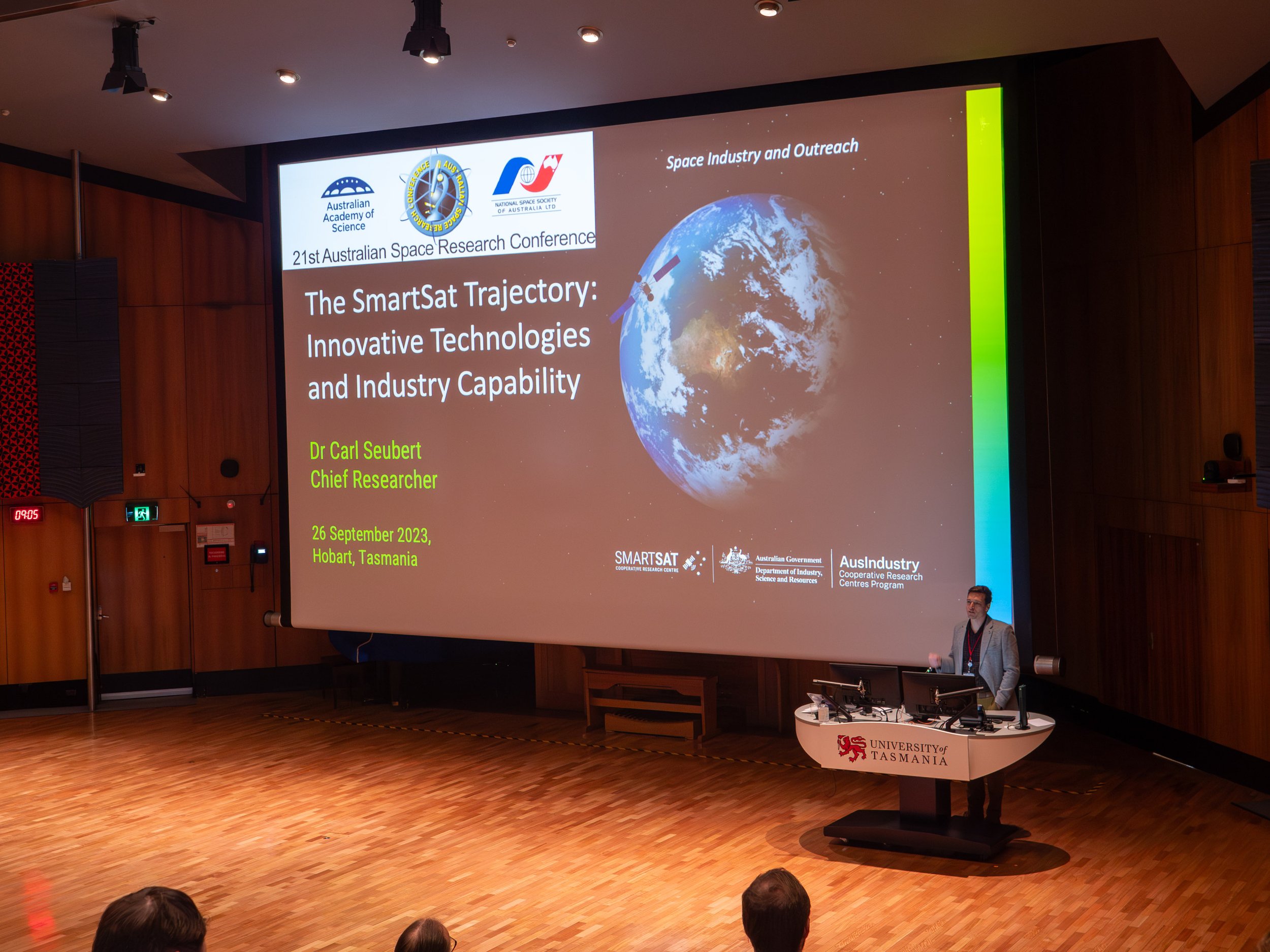
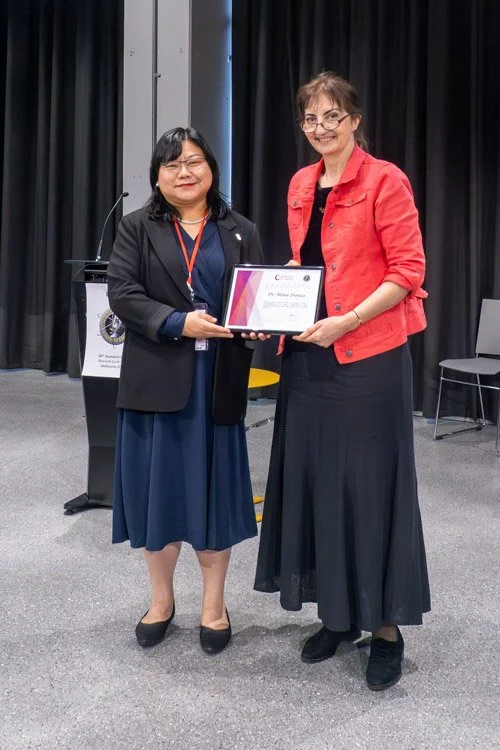

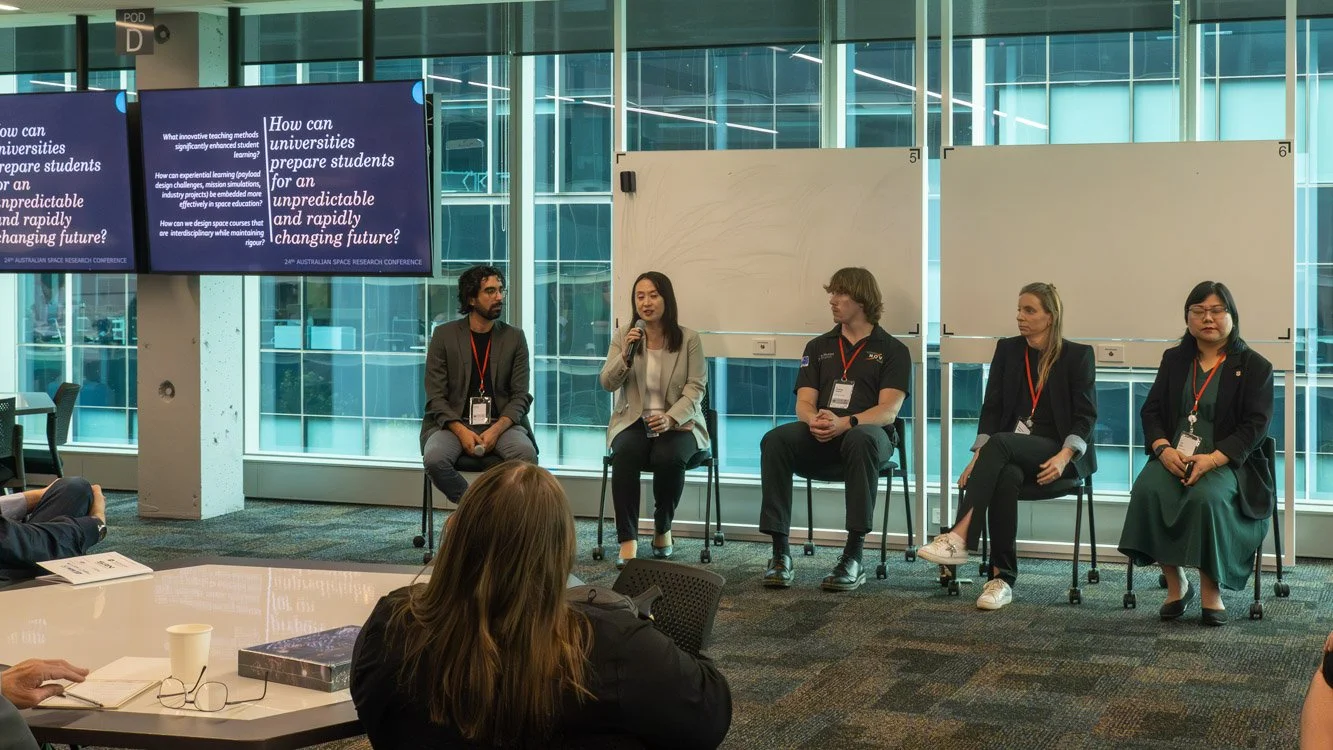
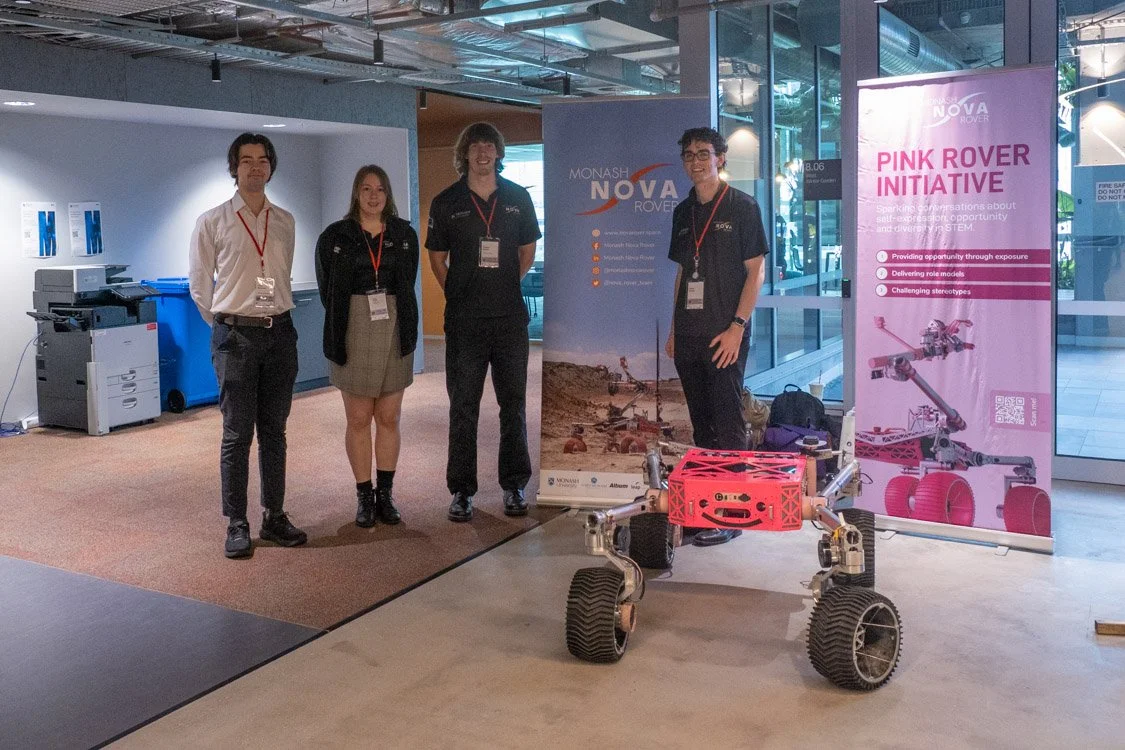
Explore the diverse range of topics our conference covers
-
Delve into the universe's mysteries through topics like space and atmospheric physics, Earth observation and remote sensing, planetary sciences, and space-based astronomy and astrophysics.
-
Explore how space affects living organisms, from understanding the complexities of human habitability in space to the study of life sciences in extraterrestrial environments.
-
Astrobiology is the scientific study of life in the universe. It explores the origin, evolution, distribution, and future of life on Earth and the potential for life elsewhere in the cosmos. This interdisciplinary field combines aspects of biology, chemistry, geology, astronomy, and planetary science to understand the conditions that support life and to search for signs of life beyond Earth.
-
Discover the technological backbone of space exploration, encompassing communications, navigation, space operations, propulsion, robotics and ai, and spacecraft design, testing, and operation.
-
Discover how we can extract and utilise resources on the Moon and other planets; including the mining of asteroids
-
Learn about the commercial and economic aspects of space exploration, from space-based industries to the business strategies propelling space ventures.
-
Unearth the past and indigenous perspectives on space with a focus on space archaeology and archaeoastronomy, the study of ancient, indigenous astronomical knowledge.
-
Stay informed about the ever-evolving space environment, including space weather, planetary defence and the tracking and prediction of natural and artificial objects in space.
-
Get to know both current and future Australian space initiatives that aim to push the boundaries of our understanding and capabilities in space.
-
Delve into the legal and international aspects of space exploration, including international relations, space policy, ethics and law.
-
Understand the educational efforts and workforce development initiatives essential for growing and maintaining a thriving space sector.
The following people are confirmed as Plenary speakers this year:
Dr Douglas Bock – CSIRO
Dr Zahra Bouya - Bureau of Meteorology
Professor Matthew Gilliham - Adelaide University
Dr Tim Parsons - HEO Space
Professor Kate Kitigawa – La Trobe University
Professor Katerina Miljkovic - Curtin University
Braeden Borg - Fleet Space Technologies
Paddy Neumann - Neumann Space
Enrico Palermo – Australian Space Agency
The Honorable Chris Picton MP – Minister for State Development, Defence and Space Industries, South Australian Government
Leyla Alpaslan - Geoscience Australia
Professor Mellisa de Zwart - Adelaide University
Conference Prizes
Prizes will be awarded for presentations made by students and ECR Career Researchers during the conference.
NSW Space Research Network Workshop
Date: Tuesday September 29
Time: 1:30pm to 3pm
Location: Engineering South room 112
Facilitator : Professor Stefan Williams (University of Sydney)
This interactive SRN workshop will explore how Australia’s space research community can build mission-oriented collaborations and translate research capability into impact. Participants will consider a central question: “What space mission could we pursue together?”
The discussion will identify shared priorities, complementary strengths and opportunities for future collaboration.
This session is open to all attendees.
Panel Sessions
Date: Wednesday September 30
Time: 11:00 am to 12:30 pm
Location: Braggs Lecture Theatre
Facilitator: Ms Tori Murray (Southern Launch)
Theme - Securing the Space Domain : Challenges and Opportunities
Facilitator: Ms Tori Murray (Southern Launch)
Date: Wednesday September 30
Time: 11am to 12:30pm
Location: Engineering South room 112
Theme - Emerging Technologies, Interdisciplinary Innovation and New Frontiers
Facilitator: Professor Volker Hessel (Adelaide University)
Registrations
We are now accepting registrations.
The draft conference program may be found here.
Sessions on Tuesday September 29
Sessions on Wednesday September 30
Sessions on Thursday October 1
A pdf copy of the conference booklet is available here.
Oral Presentations: Plenary or Invited presentations are 30 minutes in length. Normal oral presentation are capped at 15 minutes. All presenters should allow time for Q&A with other delegates. 2 minutes for normal presenters and up to 5 minutes for plenary/invited presenters.
The computer equipment in the conference rooms is using the MS Windows operating system. MS Powerpoint is the preferred format but pdf is also possible.
We are collecting electronic presentations from September 21 and instructions on the upload process will provided shortly.
Poster Presentations: These are presented in the last session on the afternoon of Tuesday September 29. Maximum poster size is A1 in either horizontal or vertical orientation. Posterboards are provided in the Atrium area and delegates need to setup their poster prior to the session. The poster authors during the dedicated poster sessions have the opportunity of discussing their research work with other delegates.

Written conference papers : We are accepting full papers to be included in the next conference proceedings which will be published in mid 2027. (This is optional for delegates).
These will be peer reviewed. The submission deadline has been extended to Monday October 19, 2026. A sample MS-Word format of the paper can be found here.
The papers are attached to your original abstract submission made in Easychair. The details on how to upload them available here.
Conference prizes : Students & ECR’s giving presentations are eligible for prizes which will be awarded at the end of conference.
Details of people under consideration will be provided shortly.
Delegates who are Markers will have access to an online form to upload their results.
Conference Program
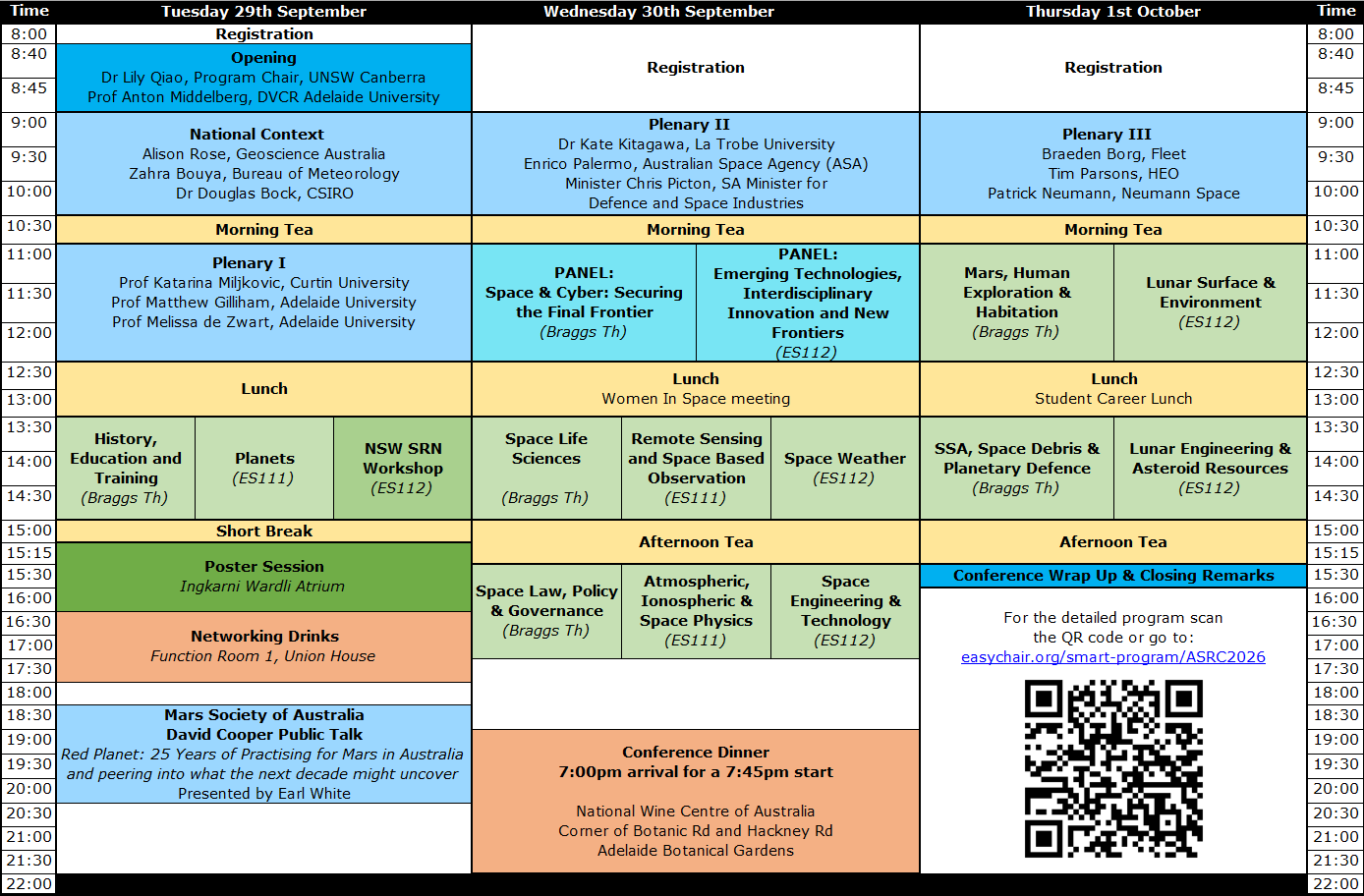
Conference Dinner
Wednesday September 30:
Time: 7:00 pm for a 7:45 pm start
Dress: Smart casual
Location:
National Wine Centre of Australia
Adelaide Botanic Gardens
Corner of Botanic Rd and Hackney Rd
2 course meal + limited drinks.
Cost: $110 per person. (use the portal to book).
Public Lecture
Tuesday September 29:
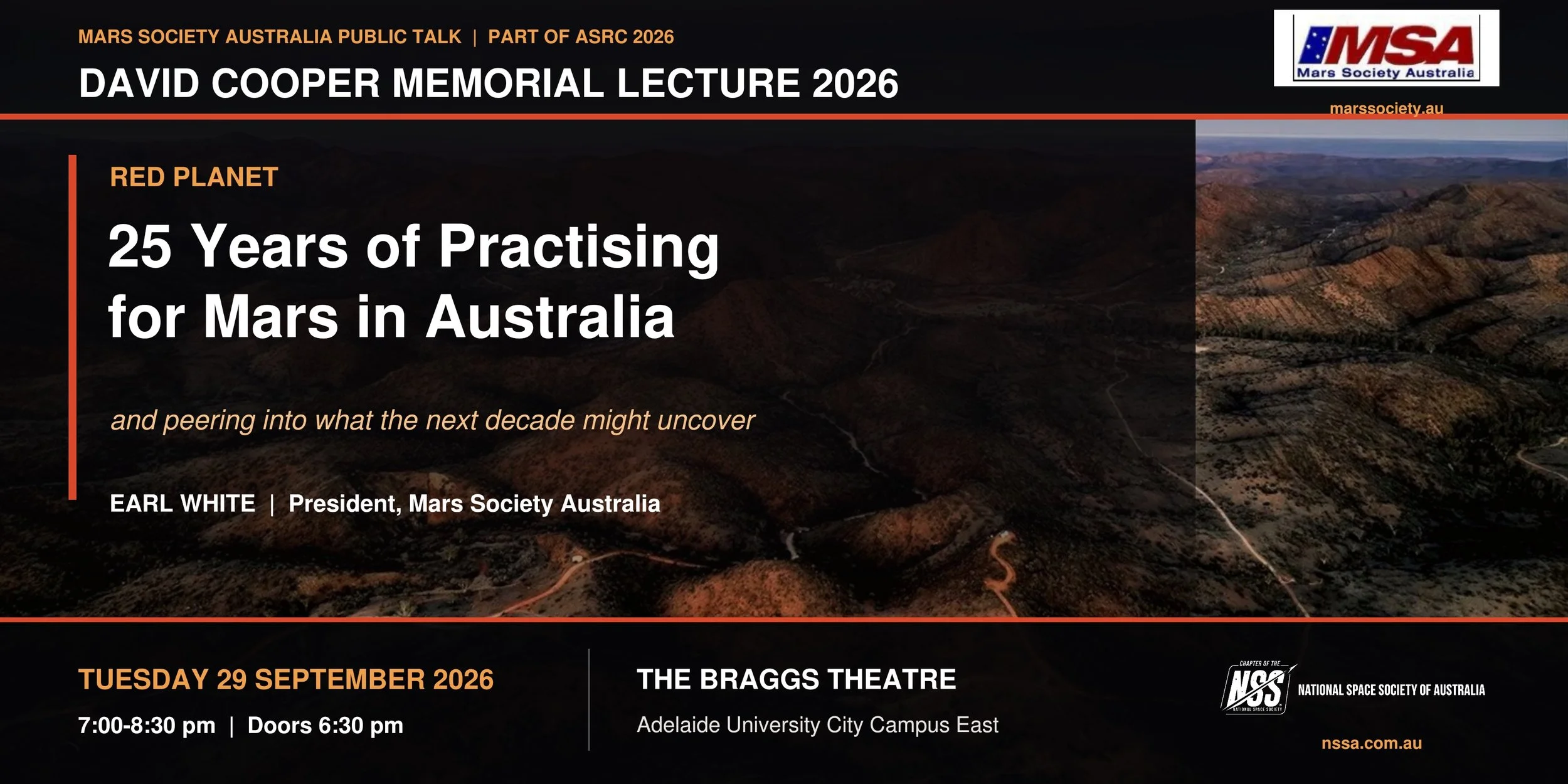
David Cooper Memorial Lecture 2026
Location : Braggs Lecture Theatre, Adelaide University City Campus East
Time: 7:00 pm to 8:30pm (doors open at 6:30pm)
Speaker: Earl White, President, Mars Society Australia
"Red Planet: 25 Years of Practising for Mars in Australia and peering into what the next decade might uncover."
Bookings by Humanitix are here or use the QRcode

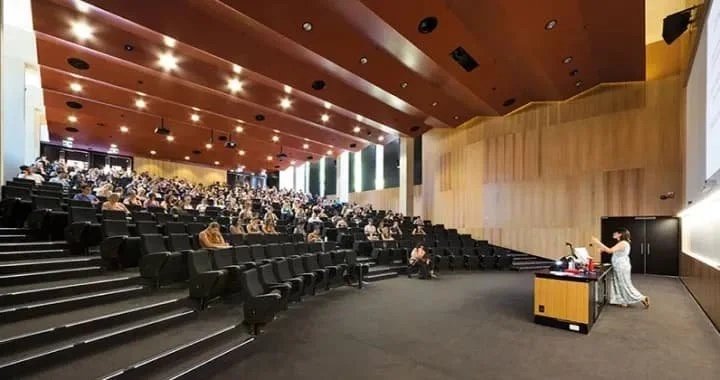
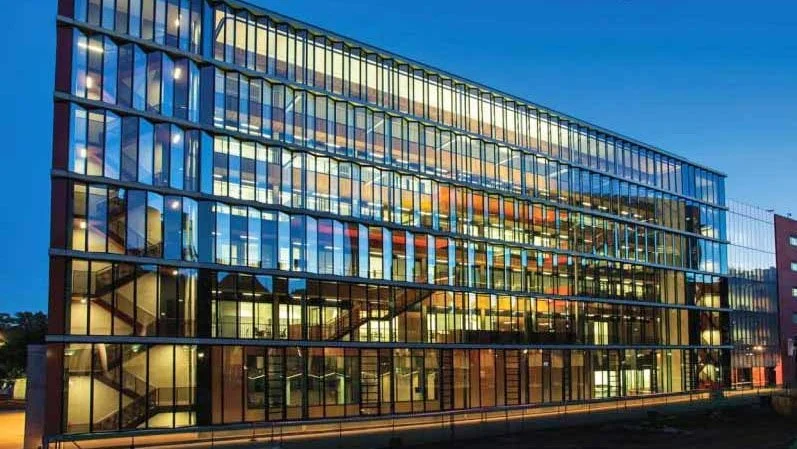
The University Campus East is located in the North Eastern corner of the Adelaide CBD. A map of the campus can be downloaded here. Information on the conference venues is located here. Directions to the main location of Plenaries , The Braggs lecture theatre, may be found here.
The Adelaide Metro website can be used for planning a journey, finding timetables, fare information, accessibility information, or recharging your metroCARD.
Train: The Adelaide Railway Station serves the North Terrace campus with routes like the Belair, Gawler, Grange, Outer Harbor, Seaford, and Flinders lines, facilitating easy access from various parts of the city and suburbs.
Bus: Stop G1 North Terrace caters to the campus with bus routes 170, 173, 174, 176, 178, 281, 286, 287, 288, 98C, and 99C, offering extensive city and suburban connections. The N178 route provides after-midnight service on weekends from Newton to the city.
Location & Transport

City Campus East
Organising Committee
Cheryl Brown, Secretariat
Iver Cairns, Conference Co-Chair, University of Sydney
Rowena Christiansen, Mars Society Australia
Guifre’ Molera Calves, University of Tasmania
Jack Dwyer, National Space Society of Australia
Bryan Foley, Adelaide University
Matthew Gilliham, Adelaide University
Richard Harvey, Adelaide University
Volker Hessel, Adelaide University
Patrick Humbert, La Trobe University
Jonti Horner, University of Southern Queensland
Li Qiao, Chair - Program Committee, UNSW Canberra
Wayne Short, Conference Co-Chair, President, NSSA
Melissa de Zwart, Adelaide University
Inquiries
General Inquiries:
asrcconference@nssa.com.au
phone: +61 411 296 541
Abstracts:
asrc-abstracts@nssa.com.au
Registrations:
asrcsecretariat@nssa.com.au
Sponsors

Interested in sponsoring the 2026 conference ? Complete our interest form here or drop us an email.